Case study
I led end-to-end design for Credit Karma’s first experience inside ChatGPT
Challenge
Be ready for launch day
As people increasingly turn to AI assistants for personal finance guidance, these interfaces need to connect to account data to deliver truly personalized answers. By being ready for the ChatGPT App Store launch on day one, Credit Karma could meet users inside a personal conversation and extend the trust users already place in Credit Karma for credit, spending, and money decisions.
OpenAI introduced its Apps SDK on October 6. Our team kicked off on October 14th and launched the beta on November 17: roughly 4½ weeks later. In that window, I designed the core experience, moved it through reviews with OpenAI as well as internal stakeholders and partners (credit bureaus, loan providers, and credit card issuers), and worked with engineering to get Credit Karma ready. OpenAI moved the broader app-store launch to December.
Approach
I had to learn a new SDK, define how Credit Karma should answer inside a conversation, set boundaries for data sharing, design the inline cards and handoffs, and get the experience approved by OpenAI. Because the platform was new, its guidelines kept changing while we built.
Review guidelines and test beta apps
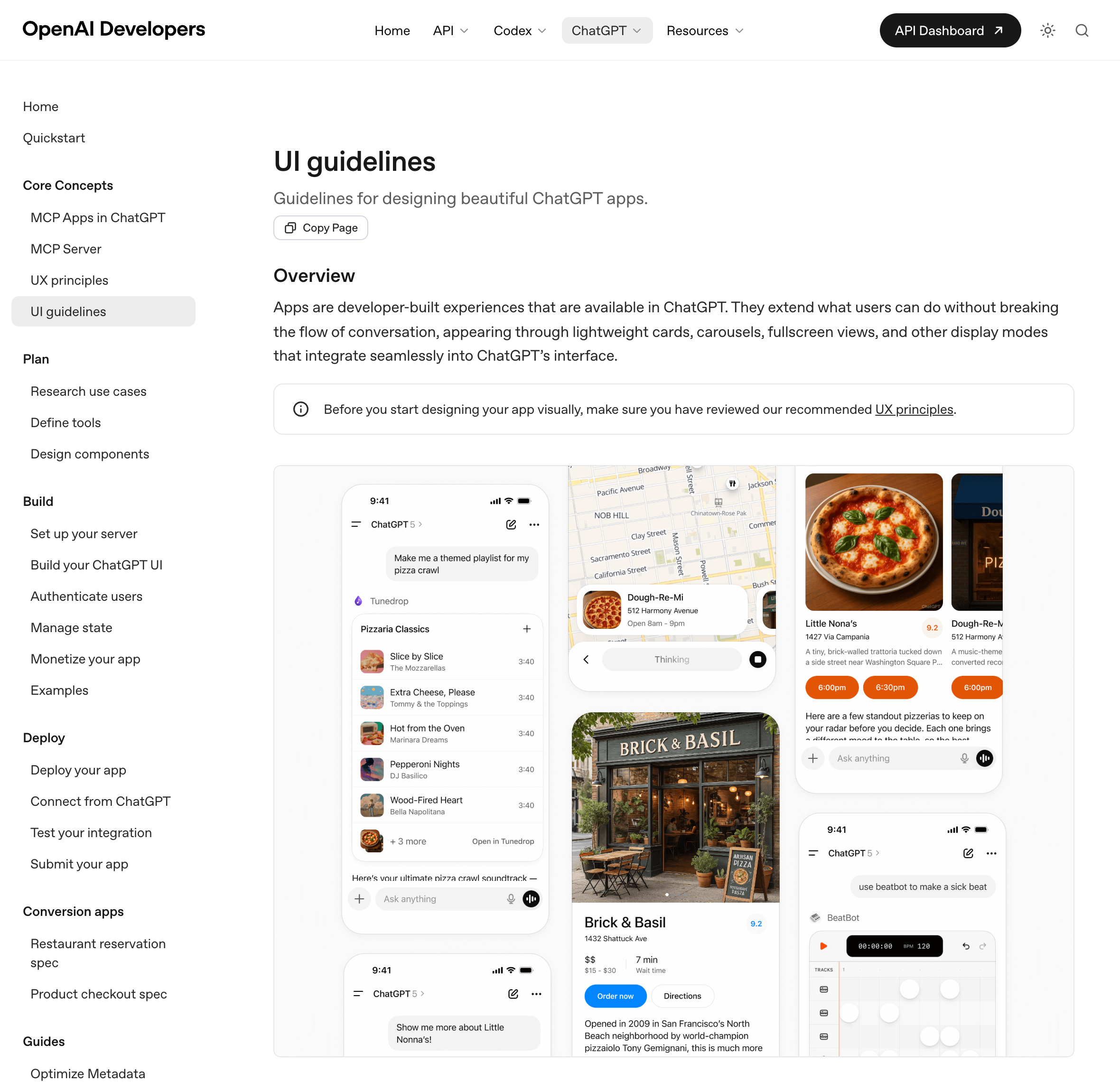
Although I had prior experience designing conversational agent interfaces, working within OpenAI’s system was completely new. I reviewed OpenAI’s app and interface guidelines and tested beta ChatGPT apps, including Spotify, Expedia, and Booking.com, to answer the questions that would shape the experience: how authentication works, which components were missing from the toolkit, where I had room to push, and what happens when the app can’t answer.
Note: OpenAI has since added much more UI guidance. At launch, the gaps forced our team to test patterns directly with OpenAI and establish rules the SDK did not yet provide.
Author the rules, not just screens
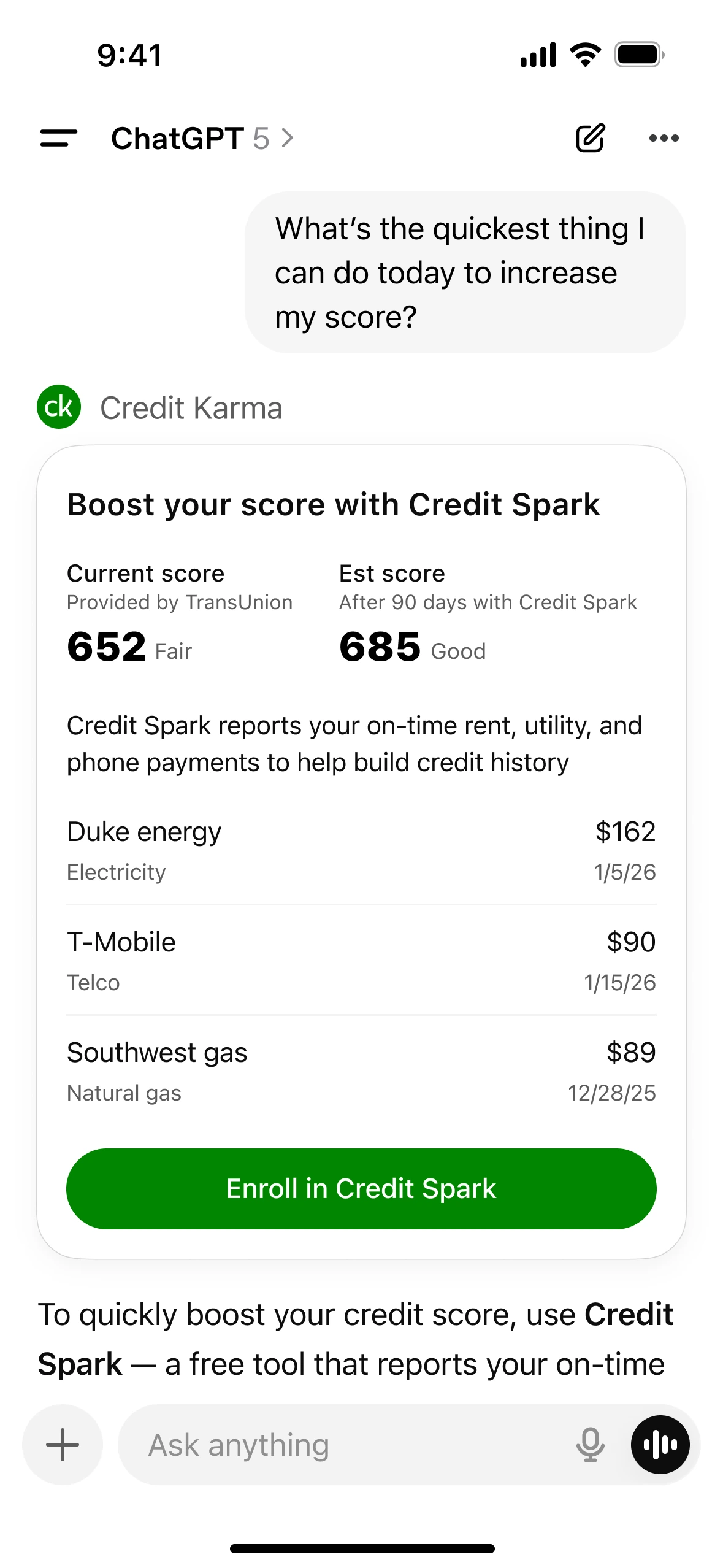
I led the core conversational framework for Credit Karma’s first Money Management and Credit use cases in ChatGPT, defining the response rules, card patterns, data boundaries, and handoff logic. I partnered closely with a designer on the Offers team to extend those patterns to credit card and personal loan recommendations and account for issuer requirements, giving the broader team one interaction model across product areas. I also worked with teams across QuickBooks and TurboTax to establish shared patterns for how Intuit products should behave on conversational surfaces outside their core apps.
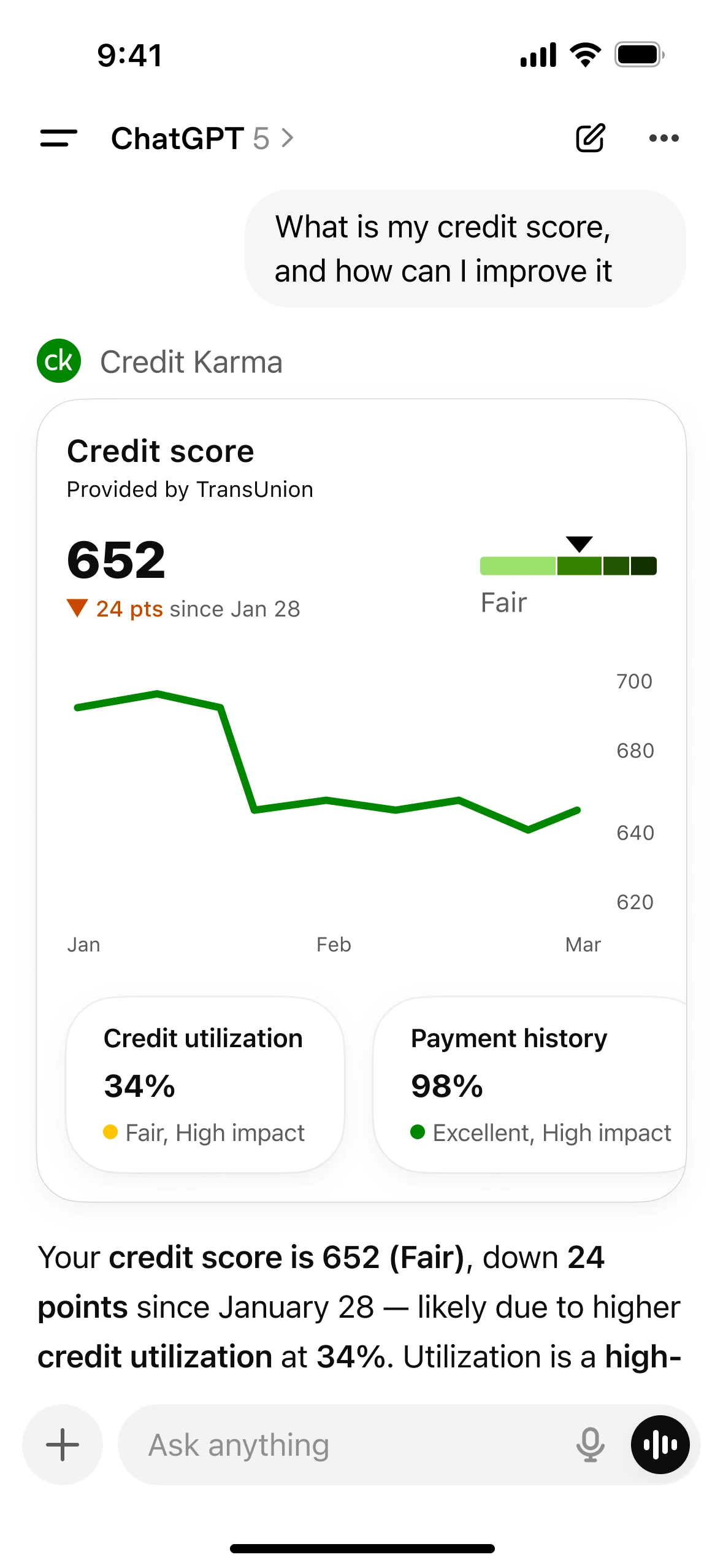
- How I designed answers. Plain text vs an inline Credit Karma card.
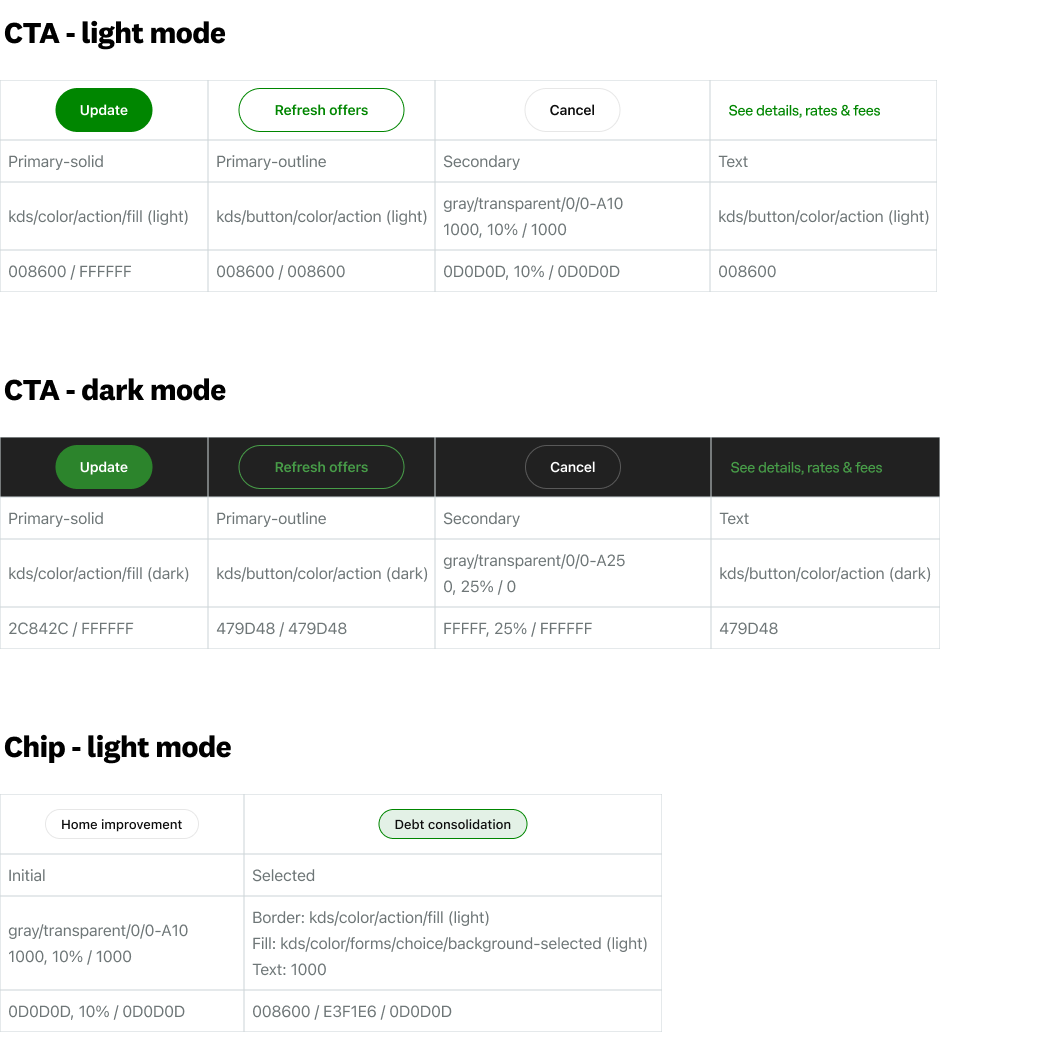
- Color & components for Eng. Credit Karma colors for primary CTAs, ChatGPT’s for secondary, so engineering knew which system to reference.
- Getting it approved. Built the demos OpenAI needed to see the value before they would approve us.
Answer at the depth the user asks for
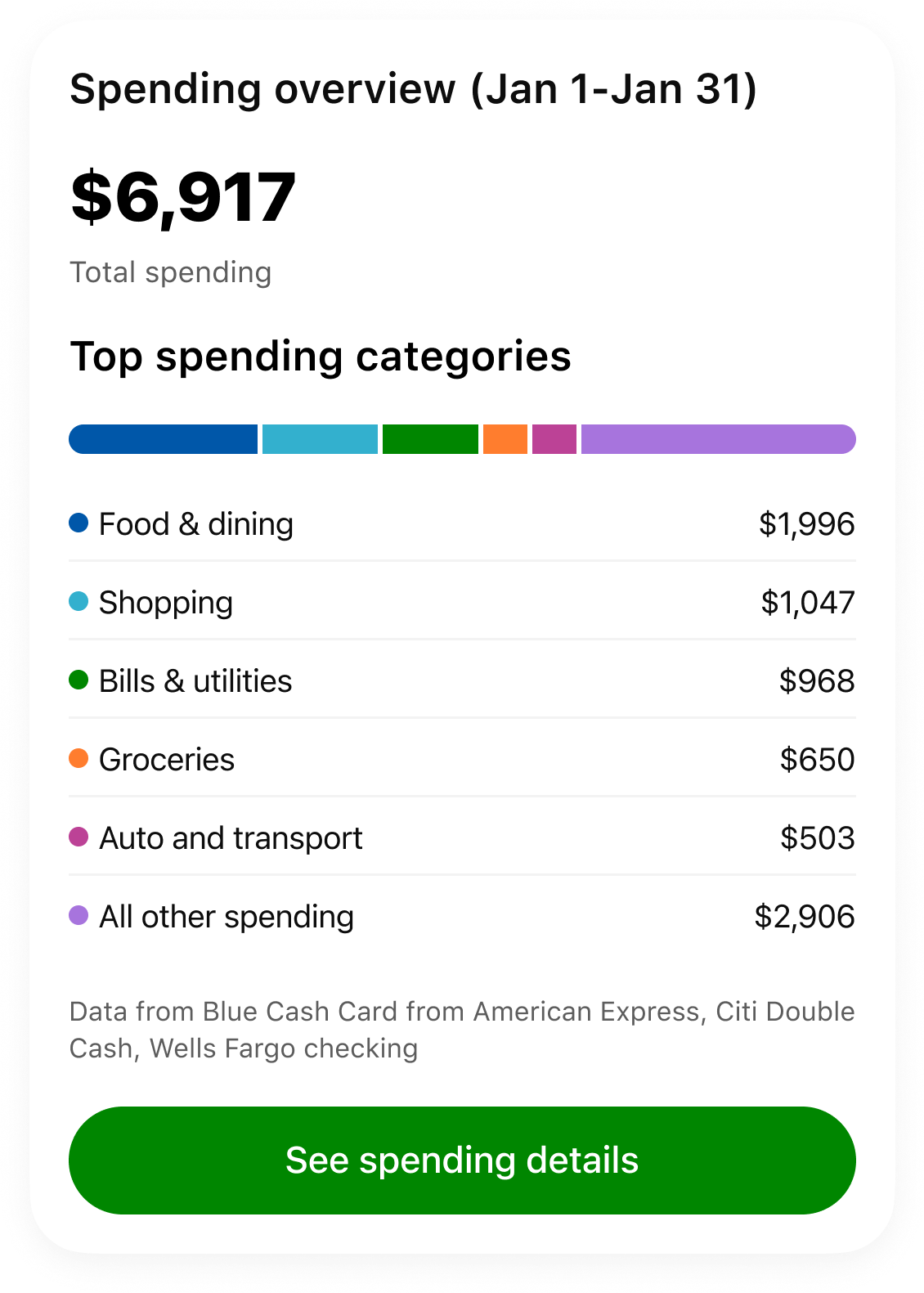
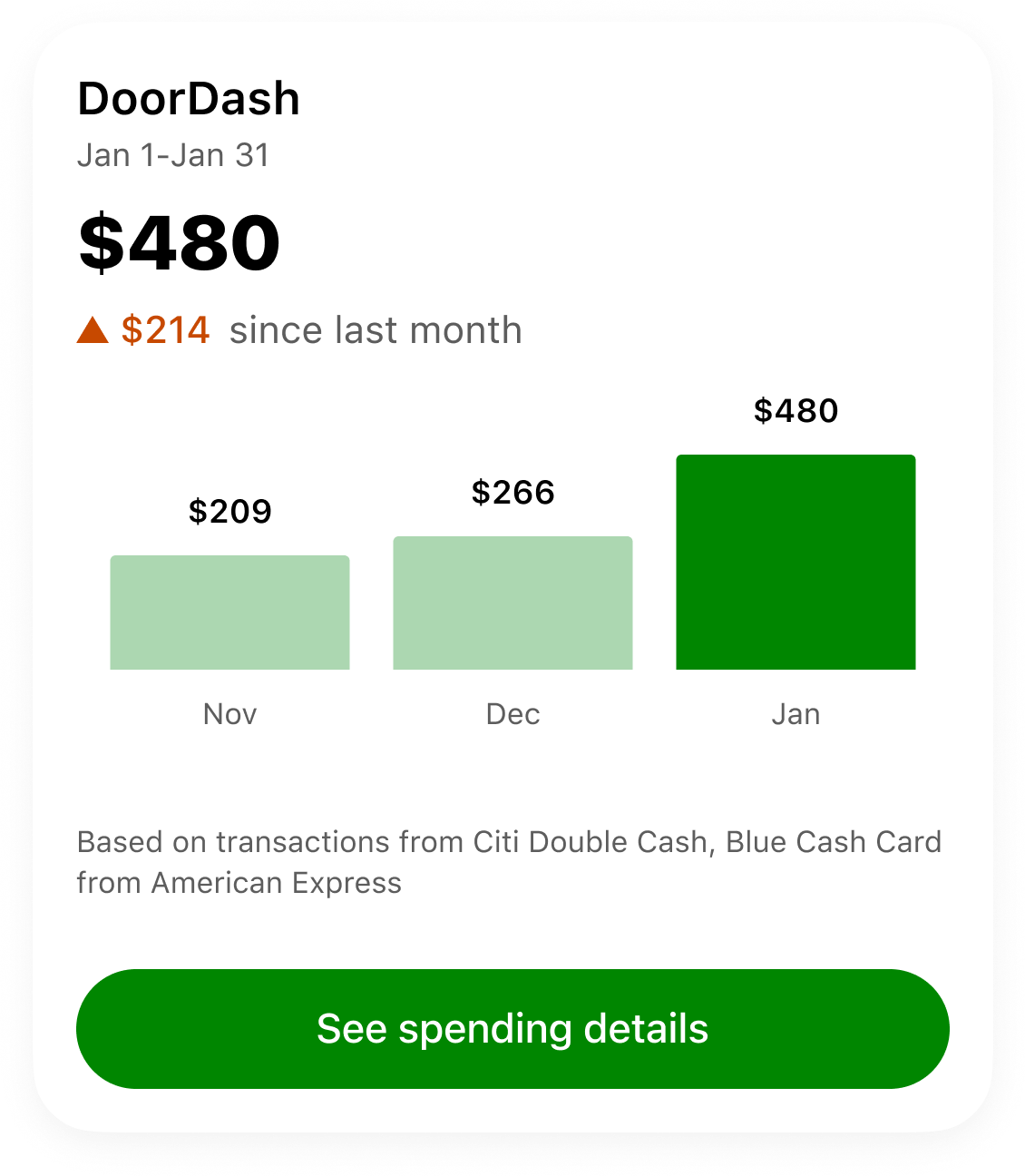
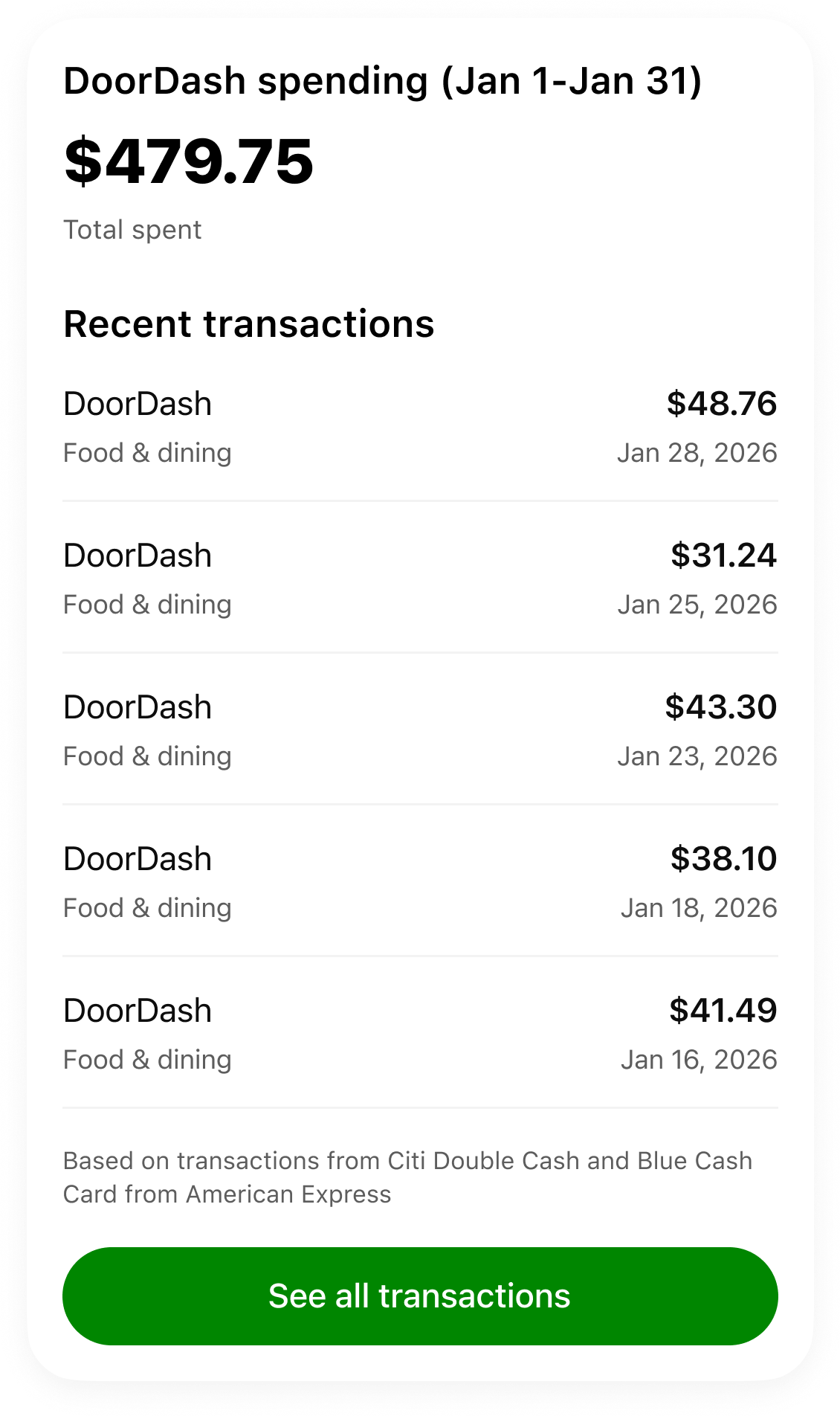
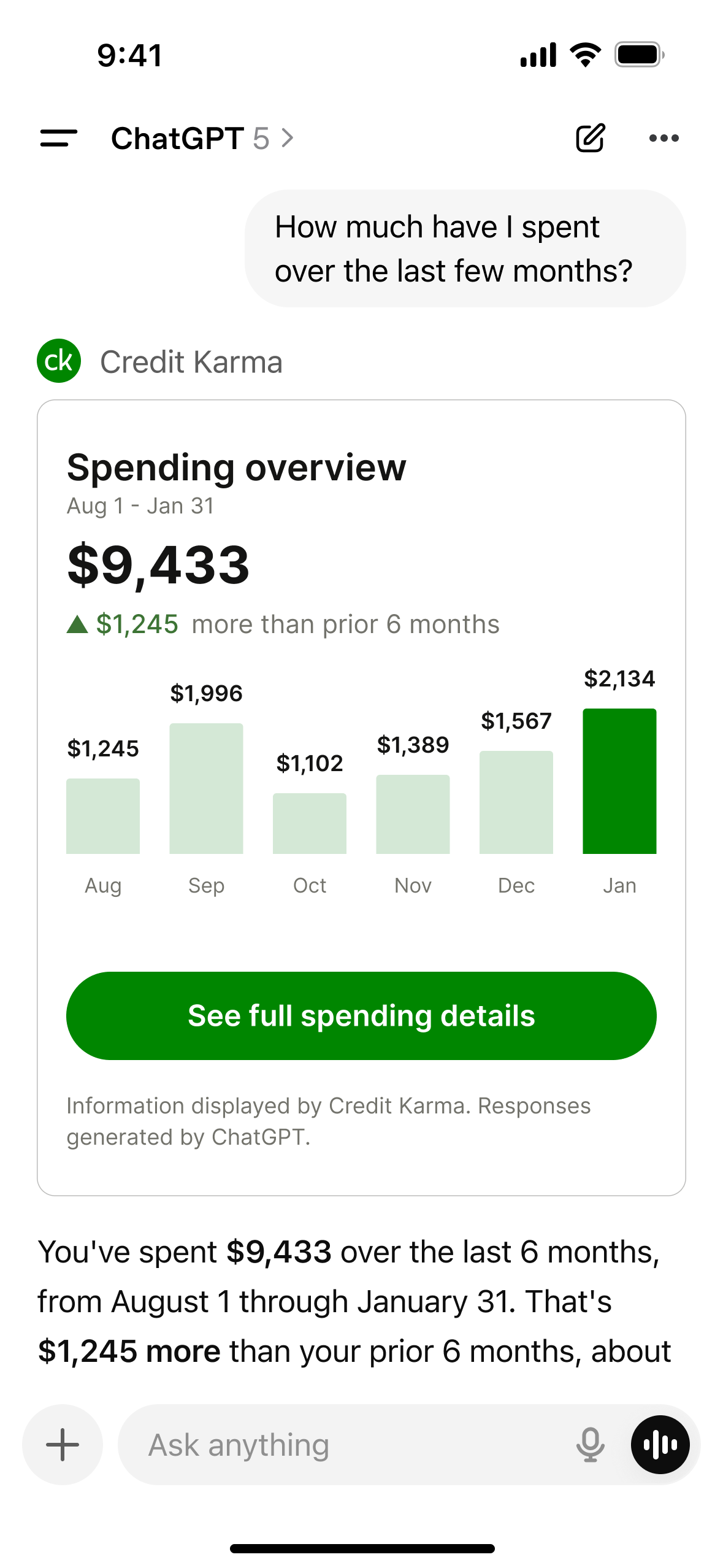
“How much did I spend?” isn’t one answer. Sometimes it’s the month at a glance, sometimes a single merchant, sometimes the line-by-line transactions. I designed the cards to start with the overview and let a follow-up open the next level: total spending to one category to a merchant to every charge, so the depth always matches what was actually asked.
A little friction makes it feel personal
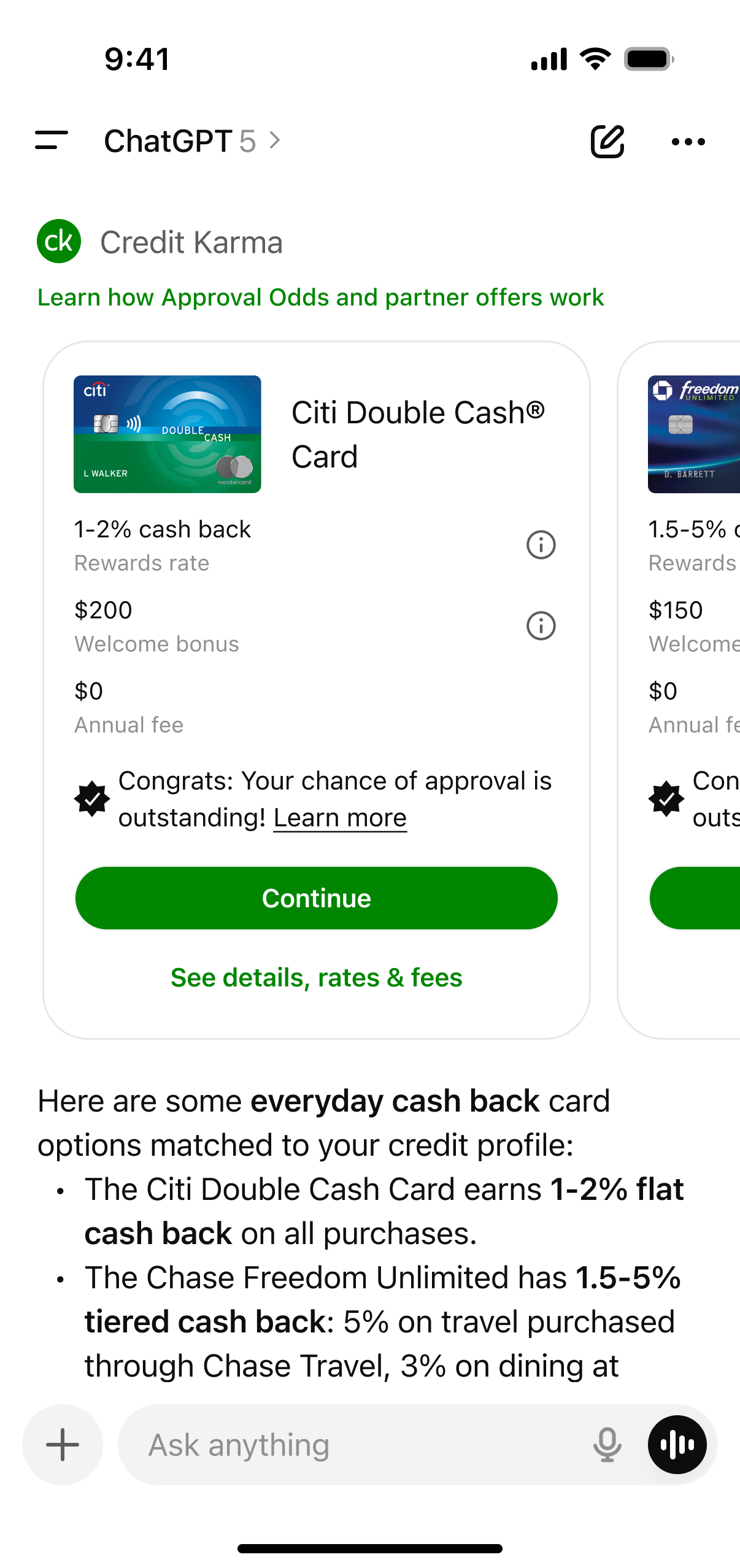
Credit Karma’s instinct was always to remove friction: surface the right product with as little input as possible. Here it backfired. When an answer takes zero effort, users read it as generic, like it could have gone to anyone, even when it’s tuned tightly to their own data. The personalization has to be felt. And the feeling comes from a small give-to-get: answer a question, add a bit of context, and the result reads as built for you. I added that friction on purpose. An offer shows up only after a real, multi-turn conversation, as one option among several, next to paths like paying from savings.
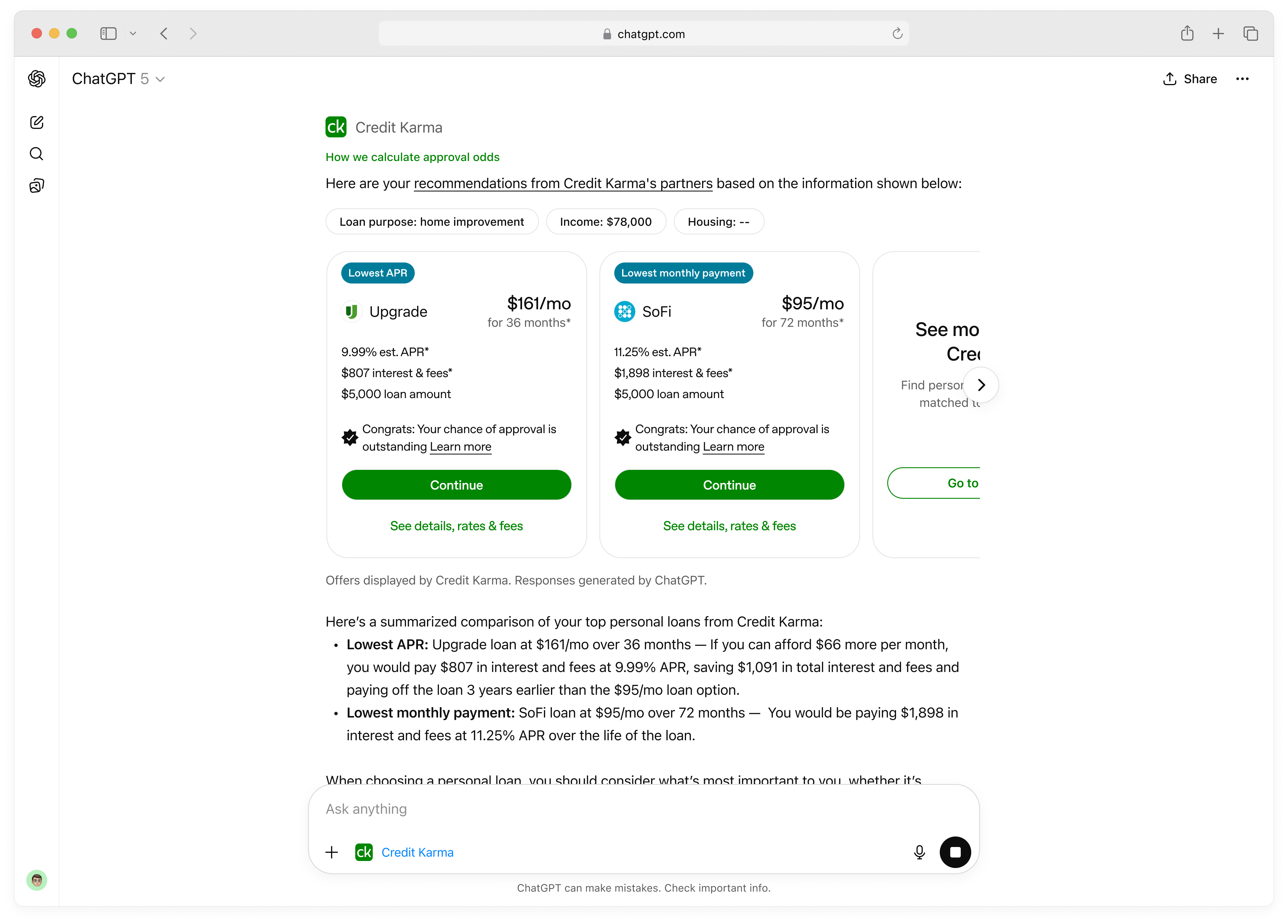
Some answers belong back home
A third-party surface can’t safely answer everything Credit Karma’s app can. Some questions need data that’s only right to show inside Credit Karma, and some a user may not want shared with OpenAI at all, even though they asked it there. So the pull back into the app is deliberate: answer what Credit Karma can responsibly handle in the conversation, and bring people home for anything that needs their full, private financial picture.
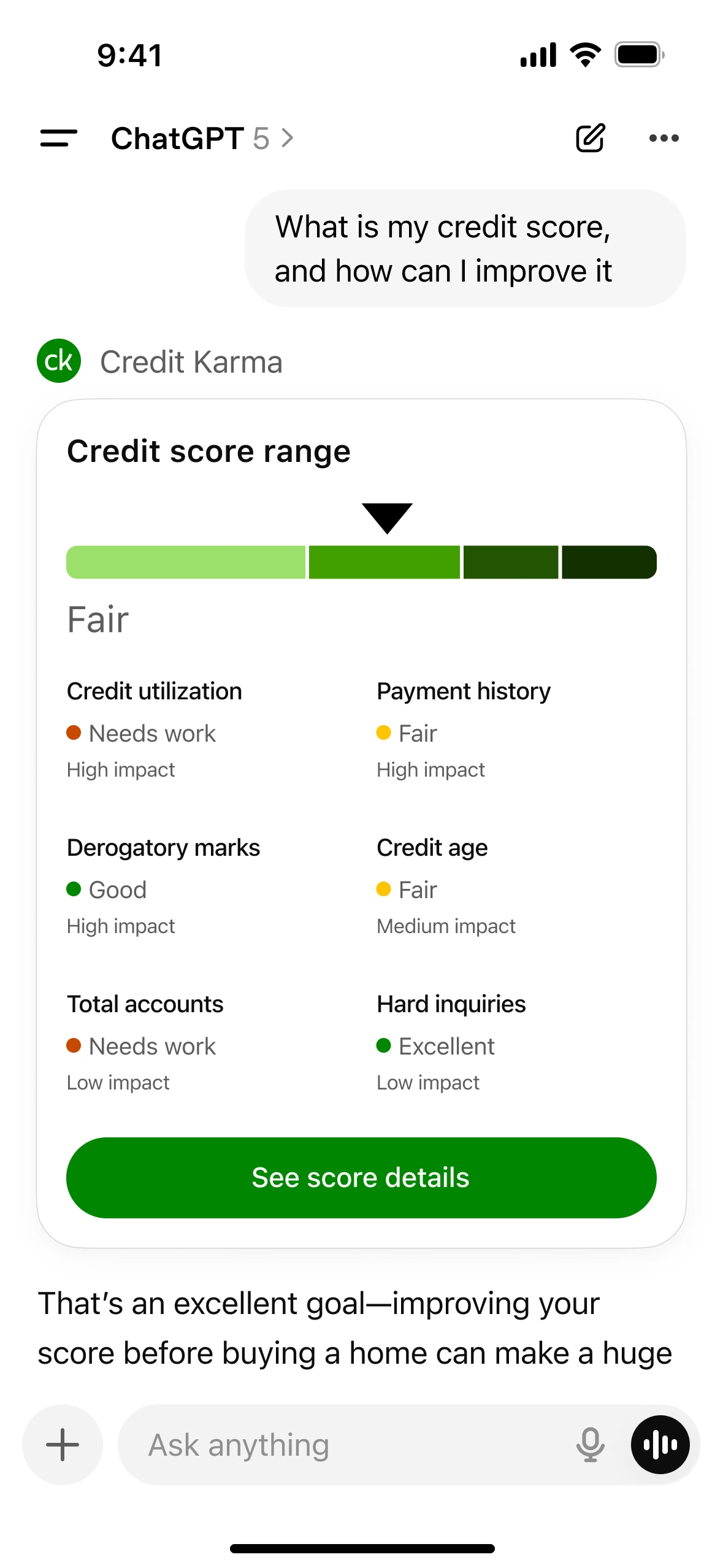
Partner agreements also changed what Credit Karma could show outside its own app. I designed a launch version that showed a credit score range and sent users back to Credit Karma for the exact number, alongside a longer-term version that could show the exact TransUnion score in ChatGPT if permissions changed.
Guiding principles
- Don’t repeat for follow-ups. On a follow-up, update the answer in place instead of stacking another card and calling it a thread. Repeating the same widget for follow-up questions would be annoying and repetitive.
- Design for multiple possibilities. I built a system from similar parts rather than trying to answer everything with a single widget or data visualization.
- Know when to ask and when to answer. If we know the user’s information, show it. If the question is vague, provide a credible starting point and help the user refine it. Guide them instead of defaulting to an automatic dead-end like “we can’t help.”
- Reveal depth on demand. Lead with the one number that matters, then let people open utilization, history, and sub-factors when they’re ready.
Results
Live on day one
Credit Karma was ready when the app store opened, as one of the first finance apps.
The full design came together in about three weeks. That pace gave engineering runway and enabled me to align with teammates across 20+ partners and teams (PMs, engineers, Legal, Partner Success, BD) for approvals and stakeholder signoff.
5,533 connections, no marketing
In the first month after launch, 5,533 people found Credit Karma in the ChatGPT app store and connected their accounts without marketing or in-product promotion.
That early adoption suggested people were willing to bring their financial data into a conversation when it produced a more useful answer.
What launching early made possible
Credit Karma launched early to learn how people would use a financial app inside ChatGPT and to establish a place on the platform. OpenAI’s phased rollout limited reach, especially for products such as credit cards and loans. I continued working with engineering to refine the experience and expand what it could answer as access grew.
Built to travel to the next platform
I set the team up to take the system to a second release and beyond ChatGPT.
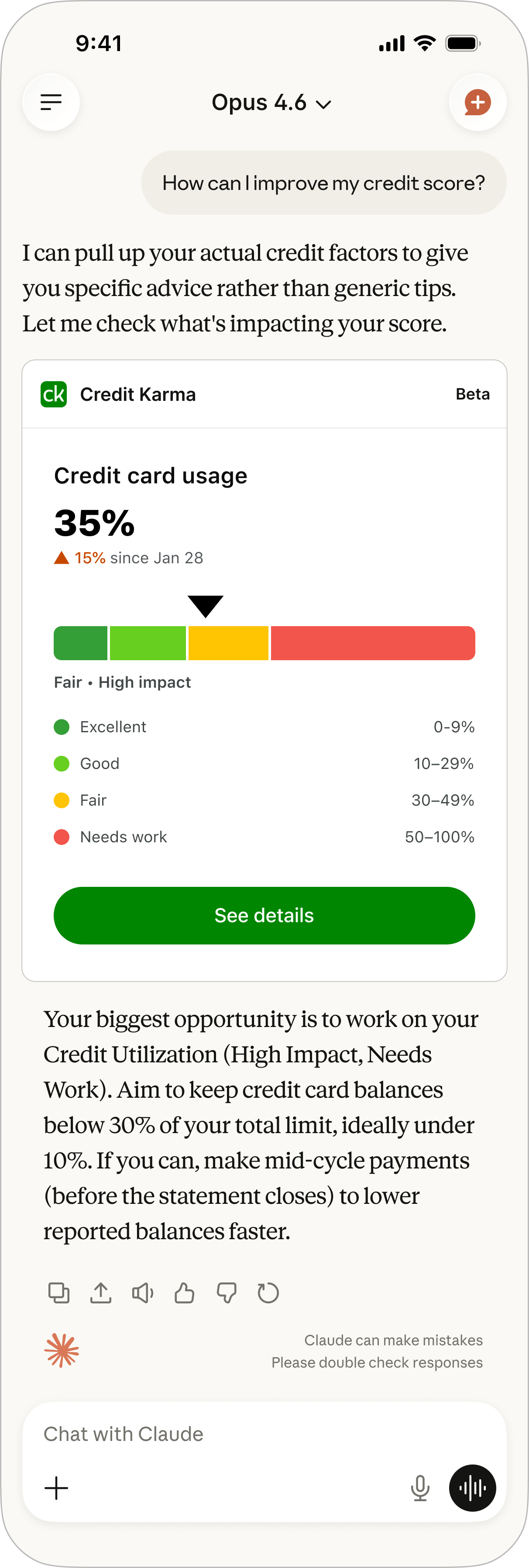
The framework extended beyond the first release. Other Credit Karma teams used the patterns to bring additional product verticals into conversational surfaces, while the same system carried into Claude without a redesign.
- Live on Day 1
- In ChatGPT App Store
- 5,533
- connected in month one, no marketing
- 4½ wks
- kickoff to launch